Having Your Wisdom Teeth Extracted
Consultation and Preparation
During your initial consultation, we will take x-rays and use specialized imaging tools to get a clear picture of the positioning of your wisdom teeth.
Making Your Experience Great
We are committed to making your experience a great one! Thanks to rapidly advancing technology, new medicines, sterilization and infection control options, Dr. Biggerstaff, Dr. Parker and Dr. McElroy are able to perform the procedure in a way that promotes quicker healing and minimizes pain. For eligible patients, we also offer same-day surgery appointments at our Kernersville office, making it easier to get the care you need without unnecessary delays.
Why Choose an Oral Surgeon for Wisdom Teeth Removal?
Wisdom teeth removal can be more involved than a routine tooth extraction, particularly when teeth are impacted, positioned near important nerves or sinuses, or require a more complex surgical approach. Oral surgeons for wisdom teeth removal have specialized training in surgical tooth removal, facial and jaw anatomy, anesthesia, and the management of complications that may arise during treatment.
At Advanced Oral & Facial Surgery of the Triad, Dr. Teresa Biggerstaff, Dr. Wesley Parker, and Dr. Kelly McElroy provide wisdom teeth evaluation and removal at our Kernersville and Bermuda Run/Advance offices. Their oral and maxillofacial surgery training includes the management of impacted wisdom teeth and the administration and monitoring of anesthesia and sedation, allowing treatment to be planned around the position of the teeth, the complexity of the procedure, and each patient’s comfort needs.
The Day of Your Procedure
Prior to your wisdom teeth removal surgery, we will send you home with very specific pre and post surgical instructions so that you know what to expect.
A few key items:
- Don’t eat or drink the day of your procedure. (Pre-approved medications may be taken with a sip of water.)
- Anesthesia: Most people prefer to be sedated for the procedure, however we do offer a variety of levels of anesthesia to accommodate personal preferences. We are trained and highly experienced with anesthesia to provide you with a safe and comfortable experience.
- Bring a Parent (or responsible adult): It is necessary that you bring a responsible adult with you to the office and that they remain with you throughout the day. We will not be able to release you alone.
- Medications: Make sure you have your pain medications (over the counter and prescription if necessary) ready to go for when the anesthesia starts to wear off at home.
- When You Get Home: You will feel sleepy for the remainder of the day. You may have numbness in the jaw (which shouldn’t be confused with nerve damage) and possibly a sensation of your gums feeling swollen and pulling away from your teeth – all of this is a normal part of the healing process.
- Foods: Specific instructions will be sent home with you regarding the reintroduction of foods. But, as a general rule, start with clear liquids and progress to other soft foods slowly. Avoid dairy products the first day, as they tend to interact with anesthesia, sometimes causing nausea.
- NO Straws: Throughout the healing period, you may not use straws (or tobacco). Using straws can dislodge the clot that is covering your extraction site, resulting in a very painful condition called “dry socket”.
Wisdom Teeth: The Procedure
The length of your surgery depends on a variety of factors including the level of impaction of your teeth and the number of teeth being removed. However, most wisdom teeth extractions can be performed in about an hour. During that time you will be kept comfortable with anesthesia.
Recovery from Wisdom Teeth Extraction
Post-op soreness can typically be managed with over-the-counter medications, however all medication options will be discussed ahead of your surgery to ensure that you have adequate pain relief at home as the anesthesia wears off.
Wisdom Teeth Complications
Luckily, complications following wisdom teeth removal are rare, and largely avoidable. However, if you suspect any of these complications, please call us for instructions:
Dry Sockets:
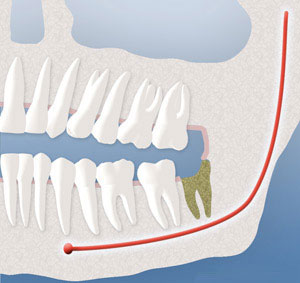
The most common complication following a tooth extraction, “dry socket”, occurs when the blood clot in an extraction site becomes dislodged or never develops properly. This can happen for a variety of reasons, including smoking and straw use, improper home-care such as vigorous rinsing, and unknown infections. If you have symptoms of dry socket, please call our office immediately so that we can get you proper care and pain control. Dry socket symptoms typically appear several days after your surgery, and may include:
- Significant pain.
- Pain radiating to the ear, cheek, etc.
- Bad breath or unpleasant taste in the mouth.
- Visible bone or an empty-looking socket.
Infection:
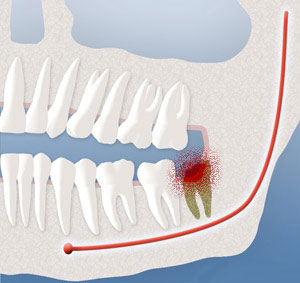
Signs of infection include fever, worsening pain and swelling.

Damage to Sensory Nerve:
It is normal to feel some numbness or tingling in the lower lip, chin or tongue following surgery. However, very rarely, sensory nerve damage occurs that causes the sensation to stay permanently. Having your wisdom teeth out early (before 18) lessens the likelihood that this condition will develop – another reason to take care of this important procedure during the teen years!
Sinus Communication:
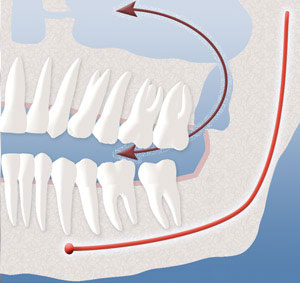
Because the upper wisdom teeth are so close to the sinus cavities, occasionally an opening appears between the sinuses and the mouth following extraction. This “hole” will usually close on its own, provided that you follow specific instructions (avoid blowing your nose, sneeze with your mouth open) to avoid a pressure buildup in the sinuses for a few days. Very rarely, we must perform an additional procedure to close the opening.
If you have any questions now or after your surgery, give us a call – the more you know, the more confidence you will have on the day of your surgery!
Frequently Asked Questions
During your consultation, Dr. Biggerstaff, Dr. Parker, or Dr. McElroy will review your health history, examine your mouth, and use X-rays or specialized imaging to evaluate the position of your wisdom teeth. Your surgeon will explain whether removal is recommended, what to expect from the procedure, and which anesthesia options may be appropriate. AOFSTriad also offers same-day wisdom teeth consultation and surgery appointments through the Kernersville office for qualifying patients.
The length of surgery depends on factors such as how many wisdom teeth are being removed and their level of impaction . At AOFSTriad, most wisdom teeth extractions can be completed in about an hour, although more complex cases may take longer.
AOFSTriad offers several levels of anesthesia and sedation , including local anesthesia, oral sedation, nitrous oxide, IV “twilight” sedation, and general anesthesia. The appropriate option depends on your procedure, health history, and comfort needs, and your oral surgeon will review the plan with you before surgery.
That depends on the type of anesthesia selected. With local anesthesia, you remain awake. Nitrous oxide and oral sedation help you relax while remaining conscious, while IV “twilight” sedation may leave you awake or drifting in and out of sleep with little memory of the procedure. General anesthesia allows you to remain asleep during treatment. Your surgeon will recommend the option that is appropriate for your care.
Not necessarily. Dr. Biggerstaff, Dr. Parker, or Dr. McElroy will evaluate each wisdom tooth individually based on its position, level of impaction, symptoms, and whether it may affect nearby teeth or tissues. Your surgeon will explain which teeth, if any, should be removed as part of your treatment plan.
Recovery varies depending on the number and position of the teeth removed and the complexity of the procedure. AOFSTriad notes that swelling typically peaks at 48 to 72 hours after surgery and then begins to improve. Your surgical team will provide instructions based on your procedure, and you can review the practice’s post-operative oral surgery instructions for additional guidance.
Oral and maxillofacial surgeons have advanced training in surgical tooth removal, impacted teeth, facial and jaw anatomy, and anesthesia. At AOFSTriad, Dr. Biggerstaff, Dr. Parker, and Dr. McElroy provide wisdom teeth surgery at the practice’s Kernersville and Bermuda Run/Advance offices and can manage both routine and more complex extractions. Learn more about the practice’s oral surgeons .